Reflection for Sunday October 18, 2026 Worship Sharing
The earth is the Lord’s, and everything in it, the world, and all who live in it; for he founded it upon the seas and established it upon the waters. Psalm 24:1,2
As Jesus looked up, he saw the rich putting their gifts into the temple treasury. He also saw a poor widow put in two very small copper coins. “Truly I tell you,” he said, “this poor widow has put in more than all the others. All these people gave their gifts out of their wealth; but she out of her poverty put in all she had to live on.” Luke 21:1-4
Each of you should use whatever gift you have received to serve others, as faithful stewards of God’s grace in its various forms. 1 Peter 4:10
Holistic Stewardship
About fifteen years ago, a group of Christians representing several area churches assumed leadership of the small food pantry which had operated in Winchester for many years. (Several of those Christians were Friends from this Meeting.) The elderly person who had been running the pantry was unable to continue doing so, but the churches and individuals who had been supporting it financially did not want the community to lose a vital ministry to residents who struggled to afford adequate nutrition. Meetings were called, a governing board was elected, volunteers were recruited, and the pantry’s operation transitioned to new leadership with the lofty goals of improved efficiency, accountability, and quality of service – in other words, better stewardship.
The new board got right to work. They saw that, in addition to random food items donated by individuals and churches, the retired leader was giving out staple items which had to be purchased from grocery stores with donated money at retail price. The board initiated membership in the area food bank which enabled access to free government commodities and the purchase of food more affordably, sometimes at one-fifth of the retail price, and delivered right to the pantry. The new board learned that donors to the pantry received little information as to how their gifts were being used, so letters began being sent to acknowledge donations and give details of the numbers of households being served. Eventually, the board completed the laborious process of obtaining 501c3 status as a nonprofit organization to enable tax-free donations. Instead of just two or three people operating the pantry, twenty or more volunteers began helping out in shifts each month. And despite very limited cold storage space, the pantry placed much greater emphasis on providing healthy fresh food instead of highly-processed, less healthy items.
After a year of serving ever-increasing numbers from a tiny room in the former hospital building, the pantry board decided it was time to seek a larger facility. One was needed which could accommodate more cold storage and dry goods storage, and a more discreet waiting area for clients. Over several months, board members visited area buildings which were for rent or for sale. In each case, the price being requested and the alterations needed would have cut deeply into the money people had donated for purchasing food for hungry families. After a lot of deliberation and consultation, the board decided to construct the environmentally-friendly building now known as the Shalom Center on the campus of Winchester’s St. Vincent hospital. Because providing healthy food to low-income families fit nicely into their corporate mission, the hospital kindly made land available to the pantry board for a token annual fee. Some businesses and organizations made early contributions to a building fund. In an effort to practice good stewardship of legacy funds donated to the Meeting but not immediately needed, Winchester Friends agreed to loan the board, without interest, whatever funds had not been raised and were needed to start construction. Ground was broken in early 2012, and the Shalom Center finally opened in late 2014.
Holistic Stewardship When I think about stewardship, one of the first things that comes to mind these days is that food pantry. For me, it is a good – though certainly not perfect – illustration of the stewardship of all things, not just money, which God desires and empowers from those who love and serve him. The pantry preserves and distributes food to people who need it, food which might otherwise spoil or be discarded, and people who might otherwise unnecessarily go hungry. Most of the people who built the new pantry donated their construction skills and labor, taking no payment for countless hours of hard work. Working and serving in the pantry now lets the volunteers donate their time to share compassionate ministry with others, and their skills for efficient service, rather than using them just for self or lesser concerns. The Shalom Center stands as a tribute to many in this community who felt the Lord’s leading to help fund a building which practices stewardship of the environment by using far less electricity and natural gas than conventional structures of that size, leaving more donated money for purchasing food items. Funding the initial construction costs with loaned legacy funds was an expression of stewardship of that money. And money donated in good stewardship by churches, organizations, and individuals certainly does matter, too. It takes somewhere over $50,000 each year to serve the number of households being helped at the current level. The faithful, holistic stewardship of many people is making a significant difference in the lives of hundreds of families in our county.
Holistic Spiritual Stewardship A lot of outstanding secular philanthropy occurs nowadays to support efforts like the food pantry (and much bigger projects), and we all should be thankful for that. Some of it is motivated by deep humanitarian concern, some by tax benefits, and some for political influence or other reasons. Spiritual stewardship may look similar, but it is distinct from secular philanthropy in some essential ways. The basic definition of spiritual stewardship used by Christian scholars makes that quite clear – it is “the careful, responsible management of life, resources, and spiritual gifts given and entrusted by God to human beings, not owned by them.” Spiritual stewardship is a matter of using God’s resources in the manner and for the purpose for which he entrusted them to us.
It’s All God’s David proclaimed in Psalm 24:1,2 that “the earth is the Lord’s, and everything in it,” because he created every molecule of it. Some people mistakenly assume or say that the “sacred things” belong to God, but the rest they can do with as they please. Paul affirms the Psalmist’s word that it’s all sacred with his wise questions in I Corinthians 4:7, “What do you have that you did not receive? And if you did receive it, why do you boast as though you did not?” Paul goes on to state in I Corinthians 6:19,20 that we are not our own; we belong to the One who bought us with the price of his own life. Holistic spiritual stewardship must begin with acknowledging and accepting the Lord’s ownership of everything we are and have, and acknowledging our privilege and responsibility to be faithful stewards of those gifts. We do that by using and caring for his gifts exactly as he wants them to be.
Listening and Waiting for Direction How can we know how God wants his gifts treated? In Luke 14:28-30, Jesus told a crowd of listeners that a wise builder who wants to construct a tower will first sit down and “count the cost,” carefully discerning whether and how to proceed. Jesus in Luke 21 pointed out and praised a poor widow who put two small coins (the only money she possessed) into the temple offering. He told his listeners that her gift was greater than those of the wealthy who were putting in a lot of money, but held onto plenty more. The rich gave in compliance with the Law, but the widow gave from a heart of gratitude for what God had done for her. Giving without waiting to be led can leave the recipient weaker, not stronger, as stressed in the 2011 book Toxic Charity. Spiritual stewardship requires that we listen and wait for the leading and prompting of the Spirit, rather than assuming.
Faithfulness and Holy Obedience Paul wrote in I Corinthians 4:2 that “those who have been given a trust must be faithful.” Once we have accepted that Christ owns all our resources, and have sensed through patient listening his leading for how they should be used, we must faithfully channel those resources to the concerns he wants addressed. We usually think of good stewardship as not spending on expensive or lavish things, but John 12 indicates that’s not always accurate. Mary (the sister of Lazarus) brought a jar of costly perfume to a dinner shortly before the events of Palm Sunday and Easter and anointed Jesus’ feet with it. The disciples’ treasurer Judas Iscariot had a fit, saying the money for that perfume should have been used for the poor. Jesus told Judas to leave Mary alone, because she had been spiritually led to anoint him symbolically in preparation for his looming death and burial. Sometimes, obedient spiritual stewardship means spending more, not less.
I don’t disagree at all with the scholars’ definition of stewardship above, but I like to think of it as “cooperating with God’s created intention for all things — for his glory, not ours.” I also see stewardship as “getting to obediently invest the Lord’s resources in ministries which will accomplish his purposes for the world, for the Church, and for my life.” It’s investment, not philanthropy.
Often-Overlooked Assets We all may not have lots of financial resources, but we all do have many assets which God would like to use in the work of his kingdom. My guess would be that all of us have time during our days that could be better used to listen for the Lord in prayer and Bible study, or to visit lonely neighbors, or to help someone with small chores. It is likely that all of us have skills and talents God could use for his kingdom, if we’d offer them to him. As Jesus’ disciples, it is a certainty that we all have a spiritual gift or gifts which the Spirit has placed in our hearts and within our capabilities (I Corinthians 12:7-11) for use in strengthening the Body of Christ, the Church. All of us who are reading this are breathing, meaning we carry within our bodies the gift of physical life, an asset which God expects us to “manage responsibly” in gratitude for his gift. We all enjoy human relationships in our families, our workplaces, and our communities. Those relationships are gifts from the Lord which are to be cared for and treated as God created them to be treated. We all breathe the air and drink the water God has provided to sustain life. We all are responsible for careful stewardship of his gift of our planetary home to keep it clean and unpolluted for the generations still to come.
The Lord has blessed every one of us with gifts, both to help us enjoy our time on his earth, and to equip us for the joy of serving him faithfully in helpful ministry to our neighbors. He invites us to participate in his work by practicing good stewardship – by treating all his gifts and resources as he created them to be treated. If we’ll ask him, he will help us to learn his Way and to walk faithfully in it. Let’s be good stewards of his abundant gifts. Let’s be Friends.
–Ron Ferguson, 18 October 2026
Queries for Worship-Sharing and Reflection
1) What other often-overlooked assets do you see in life (besides those above) which should be stewarded?
2) Why would spiritual stewardship sometimes mean spending more, not less?
3) Why is spiritual listening through prayer and study such an essential part of good stewardship?
4) What do you see as the differences between secular philanthropy and spiritual stewardship?
~~~~~~~~~~~~~~~~~~~~~~~~~~~~~~~
Reflection for Sunday October 4, 2026 Worship Sharing
World Quaker Day 2026
Jesus called his twelve disciples to him and gave them authority to drive out impure spirits and to heal every disease and sickness….. These twelve Jesus sent out with the following instructions: “Do not go among the Gentiles or enter any town of the Samaritans. Go rather to the lost sheep of Israel. As you go, proclaim this message: ‘The kingdom of heaven has come near.’ Heal the sick, raise the dead, cleanse those who have leprosy, drive out demons. Freely you have received; freely give. Do not get any gold or silver or copper to take with you in your belts— no bag for the journey or extra shirt or sandals or a staff, for the worker is worth his keep. Matthew 10:1, 5-10
You are my friends if you do what I command. I no longer call you servants, because a servant does not know his master’s business. Instead, I have called you friends, for everything that I learned from my Father I have made known to you. You did not choose me, but I chose you and appointed you so that you might go and bear fruit—fruit that will last—and so that whatever you ask in my name the Father will give you. This is my command: Love each other.
John 15:14-17
Jesus said to them: “It is not for you to know the times or dates the Father has set by his own authority. But you will receive power when the Holy Spirit comes on you; and you will be my witnesses in Jerusalem, and in all Judea and Samaria, and to the ends of the earth.” Acts 1:7,8
Friends With a Mission
2026 World Quaker Day – Let Peace Be Among Us
Today is World Quaker Day, a day to remember, give thanks for, and pray for Friends who will gather for worship in most if not all of the time zones around the world. Friends World Committee for Consultation has set the theme “Let Peace Be Among Us” for today’s observance – certainly a relevant call, given the current turmoil in the world. Winchester Friends will use this day to lift up and embrace the updated Mission Statement we adopted for our fellowship as part of the Flourishing Friends consultation we held in late 2025 and early 2026. We believe that if Christ’s peace is to be among us, we will need to carry out the mission he has given us to the best of our ability.
As I have thought about today’s emphasis, I’ve been reminded that Jesus articulated a “mission statement” for his disciples the very first time he sent them out in ministry on their own (Matthew 10). From the very beginning, he called people not only to be his followers, but also to be his partners in ministry, in awakening others to his eternal kingdom and inviting them to enter it. While the circumstances and details of Jesus’ day were quite different from today’s, the spiritual principles undergirding the mission he assigned them have not changed.
Go Where Christ Leads You, not just where you feel like going (Matthew 10:5,6). He knows where the needs are, and where people will be most receptive to his message. Jesus also told the disciples to “start at home” (10:6). The prophetic witness of deeply committed families and fellowships builds credibility for ministry efforts farther afield.
Message and Methods Jesus told the disciples to tell and show others that “his kingdom is near” (10:7,8) They were to demonstrate that by healing the sick, raising the dead, cleansing the lepers, and casting out demons. We may never be given the power to do those miracles, but we are called to be a prayerful, healing presence in the lives of those who suffer in those ways – to do what we can do, and to be a healing reminder that Christ is present to do the rest. The early Quakers visited prisoners, built hospitals and schools, and did many similar things to fulfill that mission.
Travel Lightly Jesus instructed the disciples to trust the Lord for daily provisions, and not to be weighed down by money and excess baggage (10:9,10). The early Friends called that “living unencumbered.” It is sage advice, whether for traveling ministers or those who work from one place. Unnecessary possessions distract from the main mission.
Expect Opposition Jesus told the disciples to show consistent courtesy to all they encountered, but he warned them there would be people who rejected or even mistreated them (10:14-20,23). He instructed them to be led by the Spirit in all cases, letting the Spirit speak through them and showing wise stewardship of both Jesus’ message and reputation, and of their own time and well-being.
Be Like Jesus Disciples seeking to fulfill the mission Christ has given them will encounter many challenges, some they’re prepared for and some they’re not. Jesus said (10:25) “it is enough for the student to be like his teacher.” To be like him, we must truly know him. Early Quakers who invested themselves in knowing Christ deeply found that his Simplicity, Peace, Integrity, Community, Equality, Service, and Stewardship (the SPICES) began to mark their lives, drawing others to their fellowship in fulfillment of their mission. That remains our mission today. Let’s be Friends like that.
–Ron Ferguson, 4 October 2026
Queries for Worship-Sharing and Reflection
1) Which of the Quaker “SPICES” character qualities is/are most important to you at this time in your spiritual life?
2) What is the value in a faith community having a clear, agreed-upon mission description? How can it help individuals?
3) How can the six “points” of our mission statement equip and help us to “let peace be among us,” locally and globally?
Winchester Friends Ministry & Oversight
State of Society Report – Annual Report for 2025-2026
May-June 2026
A major focus of the 2025-2026 church year for Winchester Friends was the Flourishing Friends consultancy undertaken in 2025, facilitated by Scott Wagoner and Colin Saxton. The Ministry & Oversight and a few other invited Friends met with Scott and Colin in person and several times on Zoom to labor together over the meaning, the privilege, and the responsibilities of being a vital Quaker Meeting. One of the outcomes of the Flourishing Friends process was the adoption of the following updated mission statement to challenge and guide Winchester Friends’ efforts in ministry in the upcoming years.
Winchester Friends Meeting seeks to know Christ and to make Him known to others,
welcoming all into friendship with God through meaningful worship, authentic witness, sacrificial service, and life-giving community.
In their February, March, and April 2026 meetings, the Ministry & Oversight spent time discussing ways Winchester Friends carries out those activities, and new ways we could accomplish them more effectively. Those discussions became a kind of overview of the state of spiritual life at Winchester Friends.
Seeking to Know Christ As elders of the Meeting, the M&O members recognize their responsibility to live as examples of personal faithfulness, and to actively seek to grow spiritually. They acknowledge that without leaders and members setting that example, the Meeting will find great difficulty in flourishing. One helpful suggestion might be to encourage Friends, especially our leaders, to ask themselves daily the queries posed by the mission statement. Those queries inquire how we are seeking to know Christ more deeply, how we are making Christ known to others, and how we are participating meaningfully in worship, thoughtful witness, sacrificial service, and spiritual community.
Making Christ Known to Others As Jesus’ followers, we all are called to live “lives that speak” for him and of him, whether with words or without them. We know we must be welcoming and considerate to all visitors and inquirers to our Meeting, but sometimes we need to be more intentional about asking them to join us in worship, study and community. Sharing our updated mission statement with others could be a way of building interest in potential newcomers.
Meaningful Worship We have spent more time in contemplative prayer and waiting upon the Lord together since the COVID pandemic. Our practice of worship-sharing has encouraged broader, more personal participation in the meetings. Our choirs and musicians, the Art Club, and ministry via Zoom from Friends across the nation have all contributed to a sense of meaning in our gatherings.
Authentic Witness We recognize that we must cultivate a greater awareness and sensitivity to opportunities for witness that we frequently encounter but fail to act upon. We also acknowledge the absolute importance of “walking the talk” if our witness is to be effective. We must speak of what we actually know experientially, beyond information.
Sacrificial Service A number of Friends volunteer regularly at the community food pantry, and Friends have shown faithful financial generosity there as well. The Meeting strongly supports the foreign missions ministries of Friends United Meeting. Through our Best Trust Special Projects, we invest at least $20,000 per year into local ministries beyond ourselves which are making God’s love tangible. One of our Friends has served sacrificially as the county’s Salvation Army representative for decades, with support from the church. Several other Friends quietly do service work on their own in Jesus’ name.
Lifegiving Community Friends are glad to see one another when we gather in worship. The food pantry, the Art Club, our fellowship meals, the choirs’ activities, the USFW, and other ad hoc activities help to build a sense of community among us. Our shared responsibility for spiritual ministry, care of the property, and the Meeting’s business decisions and financial well-being all work together to cultivate a living Quaker community
We are ever aware that we are currently an aging congregation, and we ask the Lord frequently to lead young people and young families to come join us in the spiritual journey outlined by our mission statement. We recognize that we are far from perfect, but we once again commit ourselves to continue serving the Lord in these ways, as faithfully as we are able. We are trusting Christ’s Spirit to lead us in effective ministry in the 2026-2027 church year.
Winchester Friends Ministry & Oversight, May-June 2026: Cleo McFarland, clerk; Sharon Reynard; Marsha Kritsch; Kathy Simmons; Dave Longnecker; Doug Baker; Ellen Craig; Brian Lilly, ex officio; Pam Ferguson, ex officio; Ron Ferguson, ex officio
World Quaker Day 2025
Trust in the LORD and do good; dwell in the land and enjoy safe pasture. Take delight in the LORD, and he will give you the desires of your heart. Commit your way to the LORD; trust in him and he will do this: He will make your righteous reward shine like the dawn, your vindication like the noonday sun. Be still before the LORD and wait patiently for him; do not fret when people succeed in their ways, when they carry out their wicked schemes. Psalm 37:3-7
Those who wait upon and hope in the Lord will renew their strength. Isaiah 40:31
For the grace of God has appeared that offers salvation to all people. It teaches us to say “No” to ungodliness and worldly passions, and to live self-controlled, upright and godly lives in this present age, while we wait for the blessed hope—the appearing of the glory of our great God and Savior, Jesus Christ…. Titus 2:11-13
World Quaker Day 2025 — Steps Toward Renewed Spiritual Strength
The Religious Society of Friends was formed in around 1650 AD in England. At some point after that, individual Quaker worship groups (Monthly Meetings) were asked each year to prepare a report on the spiritual condition of their Meeting and share it with the movement’s leaders. The Meetings were scattered around England, and there were no electronic means of communication back then, only written messages and personal visits (on foot or horseback!). The Society’s leaders needed to know what successes and struggles the Meetings were experiencing so they could visit in a timely manner to learn, encourage, teach, and coordinate as needed. Though not required to do so, Winchester Friends’ Ministry & Oversight prepares a State of Society Report each June at the end of the church year.
The M&O’s report this year was prepared at a time of significant upheaval and uncertainty in the world, in our nation, in the global Church, and in many Quaker organizations and Meetings. That reality brought to mind the promise God made through the prophet in Isaiah 40:31 to the exiled, discouraged Israelites who were weary of captivity and wanted to return to Jerusalem. As M&O members discussed the current situation, they spoke of several steps of waiting upon the Lord which Friends could take to put ourselves in a position to receive that promised renewal of spiritual strength for facing these days, both individually and as a group. They are offered here for your consideration and contemplation.
Worship as Listening First Waiting upon the Lord means learning to “still all creaturely activity,” engaging in contemplative prayer and worship by first listening for God’s leading. An example is Jehoshaphat’s prayer in II Chronicles 20:3,4,12 — “we don’t know what to do, but our eyes are on You.”
God’s Strength, Not Ours Waiting on the Lord teaches us the importance of doing the Lord’s work in the Lord’s power, not our own, as expressed in the priest Jahaziel’s response (II Chronicles 20:15) to King Jehoshaphat’s prayer: “Do not be afraid or discouraged…., for the battle is not yours, but God’s.”
Holy Patience and Holy Persistence In doing the Lord’s work, we honor the creative tension between both being patient to wait for the Lord’s timing and leading, and being persistent in never quitting or giving up.
Living in True Community Waiting upon the Lord includes nurturing a strong, loving faith community, heeding the early Quaker advice of “knowing one another in the things that are eternal” and “watching over one another for good.”
Living With Realistic Hope Waiting on the Lord means honoring the creative tension between realism and hope; it means being honest about the challenges we face in being Christ’s disciples in the 21 st century, but also being relentlessly hopeful in the Lord’s assurance that he is with us, is greater than any and all of those obstacles, and will help us bear fruit for his Kingdom.
Committed to Ministry Like a waiter in a restaurant serves diners, waiting upon the Lord means serving him by providing what he requests, and by being his hands and feet in ministry wherever he places us, no matter how we earn a living. It means serving him and fulfilling his law by carrying one another’s burdens (Galatians 6:2).
Seeing and Loving That of God in Others Waiting upon the Lord means fulfilling what Jesus said were the Law’s greatest commands — loving God with all our heart, soul, mind, and strength; and loving our neighbors as ourselves (Galatians 5:14, the World Quaker Day theme), without exceptions, as the Lord helps us to “see that of God” in all others.
Wars, domestic violence, destructive climate disruption, economic upheaval and stress, potentially dangerous technologies, a culture of harmful self-focus, and other serious problems confront us daily in this hyper-connected world. I suspect it gives us at least a taste of how the exiled Israelites must have felt — distraught over the state of the world around them, and powerless to make it right. Into their discouragement and hopelessness, God spoke words of comfort and hope through Isaiah to tell them he had not abandoned them. He assured them that they were not powerless and that he would renew their strength, if only they would wait upon him in genuine faith. The Lord intended them to return to Judea to prepare the way for the Messiah who would bring the possibility of salvation to the whole world. I am convinced that God still speaks that promise to Christ’s followers today who are discouraged and feeling hopeless about the state of the world. If we will wait upon the Lord, he will renew our spiritual strength to serve him obediently, share his Good News faithfully, and prepare the way for his entry into people’s hearts, despite his enemy’s strong opposition. He desires to use each of us in that effort. It begins with our commitment to wait upon the Lord in the ways described by M&O members above. Let’s all do that. Let’s be Friends.
–Ron Ferguson 5 October 2025
Queries for Worship-Sharing and Reflection
1) Why is pausing periodically to consider a faith community’s (and our personal) spiritual condition a wise practice?
2) What other ways of “waiting upon the Lord” do you know and/or practice, besides the seven listed above?
3) What aspects of Quakers’ somewhat unique Christian message and practice are most meaningful or helpful to you?
4) What makes it possible for Jesus’ followers to live with both unvarnished realism and life-giving hope?
Winchester Friends Ministry & Oversight
State of Society Report – Annual Report for 2024-2025
June 2025
Do you not know? Have you not heard? The LORD is the everlasting God, the Creator of the ends of the earth. He will not grow tired or weary, and his understanding no one can fathom. He gives strength to the weary and increases the power of the weak. Even youths grow tired and weary, and young men stumble and fall; but those who wait upon and hope in the LORD will renew their strength. They will soar on wings like eagles; they will run and not grow weary, they will walk and not be faint. Isaiah 40:28-31
As the Ministry & Oversight began discussing the state of Winchester Friends’ society at the close of the 2024-2025 church year, members were asked to offer their sense of the Meeting’s condition. One Friend’s comment seemed to summarize all the others which were expressed – that “Winchester Friends is in a state of flux, with the way forward not yet clear.” That brought to mind King Jehoshaphat’s prayer in II Chronicles 20 when Judah was threatened with a massive attack by an army of neighboring nations. The king confessed to the Lord that Judah was powerless to confront the impending attack, saying “we do not know what to do, but our eyes are upon you.” After he finished his prayer, a man named Jahaziel was moved by the Spirit to say in response, “This is what the Lord says to you: ‘Do not be afraid or discouraged…., for the battle is not yours, but God’s.’” The M&O agreed the same is true for Winchester Friends at this time.
Another observation expressed was that the Meeting is in a place of patient persistence. We realize that numerical growth cannot be drummed up overnight, so impatience for that would be wasted energy. At the same time, in the spirit of Isaiah 40 (above), we recognize the importance of not giving up but waiting and persisting in listening for the Lord’s direction and obeying it regarding the Meeting’s ministries and outreach – no hurry, and no quitting.
The M&O recognizes and affirms our Friends’ efforts to continue the longstanding Quaker testimony of “watching over one another for good.” The Meeting is a “faith family,” and our members truly do care for one another in ways that are both a blessing and a witness to the wider community. One member spoke of concern that we not “cling to” Zoom attenders who find opportunities to participate in in-person fellowships where they live, but rather express care by encouraging them to obey God’s leading.
We sense in this unique moment that we are called to be a Meeting of realistic hope. Like King Jehoshaphat in II Chronicles 20, we must be honestly realistic about the challenges and limitations we face as a faith community. At the same time, we must also be honestly hopeful about the Lord’s ability to empower and equip us to accomplish far more than we have imagined, if we will trust him and obey. We understand the consistency and gradual increase in attendance at our meetings for worship, and the new people joining us over the past year, to be a confirmation of God’s call upon us and help to us for being the church he desires us to be. The FUM Flourishing Friends consultation in which the M&O has participated this year has given us all practice in thinking about Winchester Friends’ future with both realism and the hope which comes from the Lord’s presence and promise.
We are grateful for the opportunity to continue serving the Lord in these and new ways, and we look forward to seeing how the Spirit will lead us in the 2025-2026 church year.
Winchester Friends Ministry & Oversight, June 2025: Cleo McFarland, clerk; Linda Groth; Sharon Reynard; Marsha Kritsch; Kathy Simmons; Dave Longnecker; Doug Baker; Ellen Craig; Brian Lilly, ex officio; Pam Ferguson, ex officio; Ron Ferguson, ex officio
Reflection for Sunday October 6 , 2024 Worship Sharing
World Quaker Day and 2024 State of Society Report
Where there is no vision, the people perish: but he that keepeth the law, happy is he. Proverbs 29:18 (KJV)
Blessed are the pure in heart, for they will see God. Matthew 5:8
Jesus asked her, “Woman, why are you crying? Who is it you are looking for?” Thinking he was the gardener, she said, “Sir, if you have carried him away, tell me where you have put him, and I will get him.” Jesus said to her, “Mary.” She turned toward him and cried out in Aramaic, “Rabboni!” (which means “Teacher”). Jesus said, “Do not hold on to me, for I have not yet ascended to the Father. Go instead to my brothers and tell them, ‘I am ascending to my Father and your Father, to my God and your God.’” Mary Magdalene went to the disciples with the news: “I have seen the Lord!” And she told them that he had said these things to her. John 20:15-18
How Have You Seen the Lord Lately?
Winchester Friends’ State of Society / Annual Report for 2023-2024
Today is World Quaker Day, an annual occasion sponsored by Friends World Committee for Consultation to remember and pray for members of the Religious Society of Friends who will gather for worship, fellowship, and spiritual equipping in most of the time zones on earth. We are joined together by our dedication to Christ as our Savior, teacher, Lord, and friend, and by commitment to live and proclaim his eternal Truth. FWCC’s emphasis for this year’s observance is drawn from their 2024 World Plenary gathering’s closing epistle in which the phrase “We are still here – God is with us” is repeated multiple times. Winchester Friends’ Ministry & Oversight sees significant agreement between that emphasis and our own State of Society report for the ’23-’24 church year. We offer it here for your reflection and response during worship-sharing on this World Quaker Day.
______________________________________________________
When the Ministry & Oversight met for their April 2024 meeting, one of the items on the agenda was to begin thinking about the overall spiritual condition of Winchester Friends as we approached the end of the church year and prepared for a new one. The story of Easter was still fresh in our minds. Mary’s joyful declaration about having seen the risen Lord in the aftermath of the crucifixion seemed like a good challenge to M&O members to identify the ways we have seen God at work in our midst over the past year. Time was spent reflecting upon and sharing insights to that question in the group’s April and May meetings. The following are their observations and offerings.
The Lord is my strength and my shield….. (Psalm 28:7) As that conversation got underway, the first witness of God’s presence and help that was noted was his protection of the members of our Meeting and community through the trauma of the March 14 tornado that severely damaged parts of Winchester and the surrounding area. At least 48 houses were totally destroyed, another 50 or more sustained major damage, and another 100 had damage requiring repair. At least ten of our Friends’ residences were damaged. Despite all that destruction, miraculously no one died here that night from injuries caused by the tornado. One M&O member noted that responding to this disaster together has provided a positive opportunity for our community to cooperate, be more aware of ministry opportunities, and grow closer together. The Lord surely has watched over us.
Consider it pure joy…. that the testing of your faith develops perseverance. (James 1:2,3) With the widespread use of COVID-19 vaccines, the past church year was one of slow, careful emergence from the previous three years’ restrictions of the pandemic. It was a year of gradually more fellowship meals, in-person gatherings, and increasing choir activity. It has also meant some streamlining of the church’s committee structure for efficiency’s sake, given the reality of fewer people, programs, and activities than we had before the pandemic. There has not been a rush — as seen in many organizations in the past year — to return to doing everything that was being done before 2020. The sense of the Meeting has been to wait for leading, and to do fewer things well than to do many things exhaustingly or haphazardly. That process continues as we ponder how to add programs for Christian education for more people. Friends also have been faithful in financial support of the Meeting’s ministries, despite the challenges of the times. God has helped us persevere.
From Christ the whole Body…grows and builds itself up in love, as each part does its work. (Ephesians 4:16) The importance of every Friend doing their part to help the Meeting accomplish its work grows more obvious as we all grow older. The past year has posed significant health challenges to several in the Meeting, at times limiting their ability to do what they have previously done for the church. We thankfully have seen the Lord help many Friends regain good health in those situations, and we also have seen him work through others in the fellowship to make certain that needed ministries get carried out. God’s faithfulness through this time gives us hope and confidence that he will provide the people, energy, and leadership needed for our future.
Be very careful how you live….making the most of every opportunity (Ephesians 5:15,16) One M&O member spoke of seeing God’s hand in new opportunities for fellowship and ministry with people who had not previously indicated much spiritual interest. It is a reminder to us all to live with keen awareness that God is always at work in lives around us.
We always thank God for all of you…. (I Thessalonians 1:2) The M&O members concur that the consistent, active participation of distant Friends and friends who have worshiped with us by Zoom in the past four years has been a clear and encouraging sign of God’s presence and work in our midst. They have enriched our lives and our meetings by sharing what the Lord has taught, or is teaching, them. Whatever we might have sacrificed from the “former way” to incorporate online participation in our meetings, God’s gift of their input into our meetings has been worth far more.
God’s presence and work in these ways also has nudged us all back towards Friends’ understanding of worship as listening first, before we speak or do anything else. We give thanks for all this evidence that God is indeed at work in us.
Winchester Friends Ministry & Oversight, June 2024: Cleo McFarland, clerk; Linda Groth; Sharon Reynard; Marsha Kritsch; Kathy Simmons; Dave Longnecker; Doug Baker; Ellen Craig; Brian Lilly; Pam Ferguson, ex officio; Ron Ferguson, ex officio
_____________________________________________________
Working on the State of Society report reminded me frequently of the article published several years ago by our friend and Friend Colin Saxton, the former general secretary of Friends United Meeting. In that piece, he encouraged Friends to prepare for discipleship and ministry in a rapidly-changing world by regularly asking and answering the questions journalists use to get accurate information for a story – but from a spiritual perspective.
Who are we? It is my prayer that we are people who believe Jesus’ Gospel message of forgiveness and reconciliation with God, and have experienced true relationship and cooperative friendship with Christ’s Spirit who “has come to teach his people himself.” We must acknowledge that we are mostly an aging fellowship who long to share his love with others but find it increasingly challenging to reach young people and young families. We seek the Lord’s help with that.
What are we (called to do)? We are called, just as the earliest Friends were, to “walk cheerfully over the earth, answering that of God in every person.” Jesus calls us to proclaim eternal Truth as he did, and to demonstrate that Truth’s life-giving impact on us through lives of simplicity, peace, integrity, community, equality, and service. We are called to let Christ live through us his life of love, joy, peace, patience, kindness, goodness, faithfulness, gentleness, and self-discipline.
When are we? We are in a unique moment in history, one of widespread self-focus, growing secularization, and resistance to the Gospel. It is a moment of widely-shared belief that technology, science, and wealth will solve all human problems, eliminating our need for God. It is a moment crying out for authentic witness of inward spiritual transformation that results in power over sinful, destructive selfishness, in lives of meaning and purpose, and in spiritually obedient, loving use of all of God’s gifts.
Where are we? We are in the wealthiest, most advanced nation in the world’s history. We are in a conservative region of that nation, a region historically called the Bible Belt. Some researchers suggest that that “adjacent familiarity” has led to a kind of immunity to Jesus’ call to deep discipleship. Perhaps because of that, the Christianity around us sometimes seems to be the inherited, social type rather than the “inner life, friendship with the Living Christ” type.
Why are we? We are who and what we are because Christ’s life and love within us compels us to share his Good News with any and all who will listen. He helps us to see that just as he told his first disciples, “the harvest” is as great or greater than it ever has been, but “the workers” are as few or fewer than they ever have been. People of every generation are called to be bearers and reflectors of his spiritual Light to those who walk in the darkness of not knowing him. It is my prayer that we disciples at Winchester Friends truly mean the words we sing in the hymn “To Be God’s People”:
Almighty Father, give us a vision of a dying world that needs Your love and care.
We see the need, the yearning for a Savior; in Jesus’ name grant this our prayer.
To be God’s people in this place, live His goodness, share His grace
Proclaim God’s mercy through His Son, share His love with everyone.
And when we falter, be Thou our comfort, guide us as Your children that our lives may be
A beacon in this darkness that surrounds us, a Light that others then may see.
Lord, let this be true in our lives and faith community, and in all the Friends everywhere who worship you this day. Amen!
–Ron Ferguson, 6 October 2024
Queries for Worship-Sharing and Reflection
1) How have you sensed God’s presence and seen the Lord at work in your life, in our midst, and/or in the world lately?
2) In Matthew 5:8, what do you think is the connection between having a pure heart and spiritual vision for seeing God?
3) How has the fellowship and ministry of your Quaker Meeting and Friends been a help and blessing to you this year?
4) In your experience, how has Zoom participation enhanced and enriched our worship and life together for us all?
Sermon on the Mount Series Links
~~~~~~~~~~~~~~~~~~~~~~~~~~~
May 7, 2023
150th Celebration
April 30, 2023 150th Celebration with Jay Marshall, speaker
Winchester Friends Meeting, est. 1873
Celebrating 150 Years of Ministry
Meeting for Worship April 30, 2023
____________________________
With Guest Speaker Jay Marshall
Friends Minister, Author, Seminary Dean (ret.)
___________________________
When the Spirit Calls
I will climb up to my watchtower and stand at my guardpost. There I will wait to see what the LORD says and how he will answer my complaint.
Then the LORD said to me, “Write my answer plainly on tablets, so that a runner can carry the correct message to others.
This vision is for a future time. It describes the end, and it will be fulfilled. If it seems slow in coming, wait patiently, for it will surely take place. It will not be delayed.
Look at the proud! They trust in themselves, and their lives are crooked. But the righteous will live by their faithfulness to God.”
Habakkuk 2:1-4, New Living Translation
Queries for Reflection and Response
1. What is the call or sense of mission that motivates you personally? What motivates the Meeting?
2. What are some of the ways you have learned to discern what is from God and what is simply chatter?
3. What made the memorable occasions that have shaped your understanding of faith and ministry?
4. If you are a reflection of the five closest people in your life, what are you reflecting?
5. Imagine for a moment that you have climbed a watchtower in downtown Winchester. Where could the Meeting’s gifts bring hope and healing to the community?
If You Could See What I See
All of my life I have dreamed that somehow love would find me
Now I can’t believe you’re standing here
If beauty is all in the eye of the beholder
then I wish you could see the love for you that lives in me
And you would know you have my heart, if you could see, what I see
That a treasure’s what you are, if you could see, what I see
Created to be the perfect one for me, if you could see, what I see
I know there are days when you feel so much less than ideal
Wondering what I see in you
It’s all of the light and the grace your belief in me drives me to say
That I promise you a faithful love, forever true
If you could see then you’d understand why I fall down to my knees
And I pray my love will be worthy of the One who gave his life
so our love could be, if you could see what I see
You’re created to be the perfect one for me, if you could see what I see
If beauty is all in the eye of the beholder,
then I am beholding… true beauty
–Geoff Moore (CCLI 649965), sung by Judi Marshall
We Are Called
Come, live in the light! Shine with the joy and the love of the Lord! We are called to be light for the Kingdom, to live in the freedom of the city of God.
We are called to act with justice; we are called to love tenderly. We are called to serve one another, to walk humbly with God.
Come, open your heart! Show your mercy to all those in fear. We are called to be hope for the hopeless so hatred and violence will be no more…..
Sing! Sing a new song. Sing of that great day when all will be one. God will reign, and we’ll walk with each other as sisters and brothers united in love…. We’ll walk humbly with God…..
–David Haas, based on Micah 6:8; arr. Mark Hayes (CCLI 649965)
~~~~~~~~~~~~~~~~~~~~~~~~~~~~~~~~~~~~~~~~~~~~~~~~~~~~~~~
Winchester Friends Ministry & Oversight
State of Society Report – Annual Report for 2020-2021
June 2021/ October 3, 2021
Lives That Speak
Be patterns, be examples in all countries, places, islands, nations wherever you come; that your carriage and life may preach among all sorts of people, and to them; then you will come to walk cheerfully over the world, answering that of God in everyone…. –Friends founder George Fox
As the Ministry & Oversight began discussing the state of spiritual life at Winchester Friends at the close of the 2020-2021 church year, it was nearly impossible to think about the past twelve months in any framing other than that of the changes caused and necessitated by the COVID-19 pandemic. Each M&O member offered reflections on what they have observed and sensed about our life together in the past year, and their hopes for the days yet to come. The following is a summary of their thoughts.
Trials of 2020-2021 For all of us, the past year was one of significant losses and profound sorrow. At least fifteen participants in our faith community tested positive for coronavirus infection and experienced various degrees of illness. A number of our Friends lost close or extended family members to COVID or other causes during the year and often did not have the comfort of gathering to mourn together. Added to that was the sadness of watching the number of pandemic deaths in the US steadily climb past half a million. It was a year of lost chances for close fellowship, handshakes and hugs, a long period of isolation and loneliness. One M&O member compared it to the pupae stage of a butterfly’s life when the caterpillar “shelters in place” inside the chrysalis to await favorable conditions outside. It was a year without the encouragement of singing “psalms, hymns, and spiritual songs together” (Colossians 3:16). Many ministry activities had to be suspended, meaning lost inertia and momentum. In some cases, people who may have had only minimal interest in participating in the Meeting simply withdrew and have not reappeared. Because the pandemic changed so many things in our lives, we all were required to expend large amounts of physical, emotional, mental, and spiritual energy to accomplish in different ways what used to be fairly simple, routine tasks. Work, school, social, travel, and meeting schedules were disrupted, with resumption in many cases still uncertain, making planning very difficult. In the community and society beyond the Meeting (and potentially within as well), economic stress and civil unrest have led to fraying of the social fabric in ways that make many relationships tenuous.
Encouraging Surprises of 2020-2021 The M&O clerk pointed out that none of us should be surprised that the pandemic has not changed God. For those who have remained engaged and have continued seeking the Lord, the pandemic has provided a new or renewed sense of God’s identity and character. Technology was adopted and adapted to our Meeting’s unique needs in a way that has allowed us to maintain relationships and a surprisingly deepened sense of community. In the butterfly analogy, meeting by Zoom has helped break open the isolation of the chrysalis stage to make new life possible. The shift to a worship-sharing format on Sunday mornings has found encouraging success in nudging Friends to be participators rather than spectators, and it has taught us to listen more carefully for “that of God in others.” Meeting via Zoom has made it possible to welcome local newcomers, distant former Friends and family members, and other faraway friends into our fellowship in meaningful, delightful ways that none of us had imagined before the pandemic necessitated these changes. Despite the financial uncertainties and hardships that the pandemic has imposed on so many people and organizations, the Meeting’s finances have remained healthy due to the faithful generosity of so many of our Friends. That consistent support has given us confidence to continue sharing resources from the Best Trust to help “make Christ’s love tangible and visible” in the community and world around us.
Outcomes of 2020-2021 The past year has given us – and all in the Meeting, we hope – a deepened sense of Christ’s faithful presence with us and care for us, no matter how dire our circumstances might get. Worship in a more semi-programmed manner than before has shown many Friends the importance of giving verbal witness of God’s love and Truth within our fellowship when the Spirit prompts them. That hopefully has strengthened and improved their ability to do the same in their relationships beyond the Meeting. Our meetings for worship online have shown the importance of engaged participation by everyone, whether verbal or not – the things said by many Friends on Sunday mornings are most meaningful when heard and absorbed by everyone. Hopefully we will move into 2021-2022 with a new realization of the importance of showing up consistently, whether we end up sharing what we have learned, or we listen deeply to the helpful words of other Friends. Each of us has learned many things about ourselves and our calling to daily ministry during the “inactivity” of the pandemic months. If we’ll let it, that knowledge should equip us for effectiveness in the new environment of the upcoming church year. Returning to the butterfly analogy, the caterpillar-transformed-into-a-butterfly hangs in the opened chrysalis, gaining final form and strength to prepare for flight. That is the hopeful picture of Friends being readied to begin “walking cheerfully over the world, answering that of God in everyone” – letting Christ’s light shine through us, letting our lives and our living speak (Luke 8:16) in the world that the pandemic has left for us to inhabit.
Hope for 2021-2022 The Ministry & Oversight members are determined to learn and grow from the hard lessons of 2020-2021, and not to squander the unexpected blessings and opportunities that have come out of the unprecedented church year just completed. We desire to remain highly attentive to the Lord’s constant, consistent presence. We acknowledge that although we do not yet know everything we will need to understand for effective ministry in the post-pandemic world, we know we cannot just go back to what was “normal” before. We acknowledge that it will require the input and participation of every Friend in the Meeting if we are to successfully fulfill the Lord’s desires for our faith community. We gratefully recognize that the blessings we have enjoyed during the difficult past year are due in large part to a core of Friends who have remained committed to the Meeting and its ministries. They have done so because of their love for the Lord who has saved us, their love for one another in this community of believers, and their dedication to our shared spiritual life. Moving forward, we hope to find relevant new ways of letting Christ’s timeless light of love and Truth shine through us. We long to help the minimally involved to renew their seeking. We desire to welcome the uninvolved to discover the benefits of living by faith – especially young adults and families in this overly secular era for whom the pandemic has been a rude awakening to human frailties and mortality. Like the butterfly that has been protected and nurtured inside the chrysalis, we know we must in faith release our grip on the refuge of “what has been” and fly into the unknown future in order to fulfill God’s calling and purpose for us.
We invite every Friend in the church to join us in that journey. Like Paul appealing to the Corinthians (I Cor. 2:1), we cannot depend on eloquent words or superior human knowledge (or slicker technology and flashy entertainment). We welcome you just to let your daily lives speak, both in words and actions, of God’s love, Truth, and presence. As George Fox discovered, it’s the way God enables us to “walk cheerfully” throughout our lives, and to forge rich connections with others who desire to know and live for the Lord. In the world’s present turmoil, he needs every one of us to get involved. Thank you for letting your lives speak in ministry through Winchester Friends.
Winchester Friends Ministry & Oversight, June 2021: Cleo McFarland, clerk; Sharon Reynard; Dave Longnecker; Linda Groth; Doug Baker; Ellen Craig; Marsha Kritsch, ex officio; Pam Ferguson, ex officio; Ron Ferguson, ex officio
Lives That Speak — Lives of Resilience and Hope
The king said to Daniel, “Surely your God is the God of gods and the Lord of kings and a revealer of mysteries, for you were able to reveal this mystery (of the king’s dream).” –Daniel 2:47
Nebuchadnezzar said, “Praise be to the God of Shadrach, Meshach, and Abednego, who has sent his angel and rescued his servants! They trusted in him and defied the king’s command and were willing to give up their lives rather than serve or worship any god except their own God.” –Daniel 3:28
Let your light shine before people, that they may see your good deeds and praise your Father in heaven.
–Jesus, Matthew 5:16
Today is World Quaker Day, an initiative of the Friends World Committee for Consultation to remind Friends that in every time zone around the world on the first Sunday of October, Quakers will gather in the presence of the Spirit of Christ. We meet to worship the Lord who unites us in a global community of faith, and to pray for one another’s effective witness in the challenges and opportunities we face. Clearly with the COVID-19 pandemic and other crises in mind, FWCC selected “Resilience and Hope: Drawing Strength from our Faith” as the theme for World Quaker Day 2021. As in the past several years, Winchester Friends’ Ministry & Oversight has chosen to present their State of Society Report for the recently-completed church year during worship on World Quaker Day. The theme of their report (“Lives That Speak”) turned out to dovetail almost seamlessly with FWCC’s focus, and with the past week’s Through the Bible chapters centered in the Book of Daniel.
Daniel was one of Judah’s young “best and brightest.” He and hundreds of other skilled and educated Hebrews were exiled to Babylon in 605 BC after the Babylonian army forced the surrender of Jerusalem, helped themselves to Judah’s treasures, and turned Judea into a client state. Part of Nebuchadnezzar’s strategy for keeping conquered nations weak was to deplete their human capital as well as their treasury. Daniel and three other young Hebrews featured in the first half of the Book of Daniel – Hananiah (Babylonian name Shadrach), Mishael (Meshach), and Azariah (Abednego) – were chosen to undergo three years of language and other training to become servants in Nebuchadnezzar’s palace (Dan. 1:3,4). As part of that assignment, they were fed rich food and wine from the king’s own table, food that had been offered to idols and included things that violated the dietary instructions of Moses’ Law. Rather than follow orders and spiritually defile himself, Daniel resolved to obey God and requested permission from their Babylonian boss to eat only vegetables and drink only water. The Babylonian feared he would be blamed for underfeeding the Hebrews, but he reluctantly agreed to a test. After ten days, the Judeans looked and performed better than their counterparts who ate the rich food. Their diet was switched, and at the end of their training years the king found them superior to all his other wise men and advisors. Their lives spoke.
When I was around five years old, I watched “Popeye the Sailor Man” cartoons on TV each Saturday morning. My brother and I became convinced that if we ate enough canned spinach, we too could get strong enough to rip the top off a can and eat the contents like a beverage. We got our mother to fix us some spinach. After I had choked down a couple of spoonsful, I went outdoors to play and saw our neighbor Mr. Carmichael working on his lawn mower in his driveway. I ran over and told him I had eaten some spinach and was now as strong as Popeye. I asked him if he wanted to see. He didn’t reply right away, so I flexed my skinny biceps for him, then slugged him on the shoulder. I was only five, but I’d bet it hurt a little. I am horrified every time I remember that incident. It makes me wonder how many parents persuaded little kids to eat canned spinach by telling them they’d be strong like Popeye. They probably should have told us more about the virtues of Olive Oil. I’m pretty sure that my siblings and I were told the Bible story of Daniel and his friends a few times, too, to persuade us to eat our vegetables and stay away from wine.
Daniel 2 tells the story of King Nebuchadnezzar’s troubling dream, and his demand that his advisors tell him both what he had dreamed and what it meant. When the advisors had no idea what the dream had been, the king ordered them all killed (including Daniel, Shadrach, Meshach, and Abednego). Daniel was given a chance to plead his case with the king and was allowed time to seek the Lord. After the Hebrews prayed, the Lord revealed the complicated dream and its meaning to Daniel. When he laid that all out to Nebuchadnezzar, the king acknowledged the sovereignty of Yahweh (Dan. 2:47, above) and spared the lives of his wise men. Daniel 3 tells us of Daniel’s three friends’ courageous refusal to bow in worship to a statue of Nebuchadnezzar, even on the threat of death. After the Lord miraculously accompanied them through the fiery furnace and enabled them to emerge unscathed, the king again praised Yahweh’s omnipotence (3:28, above). Several years later, following the Medo-Persian conquest of Babylon, their ruler Darius made Daniel one of the most powerful administrators in his kingdom (Daniel 6). Other officials, jealous of Daniel’s power and friendship with Darius, fooled the king into signing a decree sentencing to death in a lions’ den anyone who prayed to any deity other than Darius. Daniel’s life had spoken. They knew he prayed three times daily towards Jerusalem — the City of Zion where the presence of Yahweh dwelt — and would not cease doing so. He was arrested and thrown into the lion’s den, but God “sent his angel and shut the mouths of the lions.” Darius witnessed Daniel’s miraculous survival and issued a decree praising Yahweh as the one true God (6:26,27).
In young adulthood, Daniel and his three friends were forced into a horrible situation they never would have chosen. Rather than giving in to Babylonian cultural religion and surrendering their deepest identity as children of the Living God, they held tenaciously to their faith and made the best of their difficult circumstances. They were resilient. In faith, they never gave up hope that God would allow the Hebrews to return to Jerusalem and Judea, and would help them live more faithfully than the people had whose disobedience and idolatry led to Israel’s captivity. Their determination to obey the Lord in all things first, then deal with whatever consequences resulted, spoke volumes about God and about themselves to anyone who was paying attention.
We in 2021 face a combination of challenges – pandemic, climate crisis, economic upheaval and disparity, armed conflict, social and racial injustice — that may add up to nearly equal those which faced the Hebrew exiles. And due to modern communications technology, a lot more people are now paying attention. The Lord’s message to us today through Daniel’s examples is that the resilience, hope, and resolve to “seek first God’s kingdom and righteousness” which they displayed 2600 years ago are still available to all who wish to live lives that speak to others of God’s holiness, loving compassion, and eternal promise. All he needs is our invitation to allow his Spirit to live fully in us. Let’s help one another to let our lives speak for God in all we are, in everything we do.
–Ron Ferguson 3 October 2021
Queries for Worship-Sharing and Reflection
1) What have been your greatest trials or discouragements of the past 18 months? How has God helped you with them?
2) What do you think “spiritual resilience” and “spiritual hope” will look like in 2021 and beyond?
3) What encouraging surprises or positive changes have you experienced in the last 18 difficult months?
4) Why is it important to consider what others will conclude about God and faithful living when they watch how I live?
5) What are your most fervent hopes as the world and our community slowly emerge from these months of pandemic?
******************************
****************************
Winchester Friends Church 765-584-8276
124 E. Washington St. Winchester, IN 47394
www.winchesterfriendschurch.org******************************
****************************
When Jesus saw their faith, he said to the paralyzed man, “Son, your sins are forgiven.” Now some teachers of the law were sitting there, thinking to themselves, “Why does this fellow talk like that? He’s blaspheming! Who can forgive sins but God alone?” Jesus knew in his spirit what they were thinking, and he said to them, “Which is easier: to say to this paralyzed man, ‘Your sins are forgiven,’ or to say, ‘Get up, take your mat and walk’? But I want you to know that the Son of Man has authority on earth to forgive sins.” So he said to the man, “I tell you, get up, take your mat and go home.” He got up, took his mat and walked out in full view of them all. This amazed everyone and they praised God, saying, “We have never seen anything like this!” Mark 2:5-12
For the Son of Man came to seek and to save the lost. Luke 19:10
For even the Son of Man did not come to be served, but to serve, and to give his life as a ransom for many. Mark 10:45
Therefore, if anyone is in Christ, he is a new creation: The old has gone, the new is here! All this is from God, who reconciled us to himself through Christ and gave us the ministry of reconciliation: that God was reconciling the world to himself in Christ, not counting people’s sins against them. And he has committed to us the message of reconciliation. We are therefore Christ’s ambassadors, as though God were making his appeal through us. We implore you on Christ’s behalf: Be reconciled to God. God made him who had no sin to be sin for us, so that in him we might become the righteousness of God. II Corinthians 5:17-21
Our “Full Service” Messiah
Since the death of my father in late September, my weeks have been filled with memories of working at his service station in our small central Kansas town, then later at the station he purchased in a small city several miles away. My siblings and I started out as pre-teens pumping gasoline into customers’ tanks while Dad washed their windshields, checked their oil, and tested their tire pressures. (We kids’ arms weren’t yet long enough to reach across the windshields or raise the hoods.) After he got a vacuum sweeper with a really long hose that hung on the light post between the gas pumps, he also offered to vacuum the customers’ floorboards. (Long arms weren’t needed for that task, so we kids often ended up doing it.) It really was a full-service station. There were a couple of other stations in our town of 1000 people, and those “extras” were a way of attracting customers who might otherwise go fill their tank elsewhere. As we got older and our arms lengthened, the kids did all of those things out on the driveway, freeing Dad to do his repair work in the shop without interruption.
In the years after I left for college, service stations began dropping the “service” and shifting to the model of convenience stores which sold gasoline that the customers had to pump for themselves, usually for a few cents per gallon less. Dad resisted that self-service model for several reasons because his goal was more than just making money to support his family. He liked his customers and wanted to interact with them. He cared about their vehicles and wanted affordably to help keep them in the best shape possible. He especially liked doing those quick preventive maintenance favors for elderly customers who found it difficult not only to pump their own fuel, but also to scrub their own windshields and check their own oil and tires. Even when he had to charge a few cents more for gasoline to cover his costs, his customers remained loyal for many years. It was a two-way relationship, not a one-way transaction.
Why, How, What? During the first half of 2025, Winchester Friends’ elders and leaders participated in a consultation of spiritual introspection and future contemplation facilitated by the Flourishing Friends project of Friends United Meeting. Early in that process, the consultants shared a diagram of three concentric circles to represent the way faith communities plan and do their work. They called the smallest circle in the center the “Why” level, and the two larger circles outside it the “How” and “What” levels. The consultants stressed the importance of gaining spiritual clarity and unity about the organization’s “Why” before ever moving on to the “How” and “What” levels of activity. They said the “Why” circle is where an organization’s mission/purpose statement is found. Only when that mission is clearly understood and shared in unity will the organization be able to move on to effective methods and activities which help them accomplish the central mission – the “Why.” The consultants observed that far too many organizations try to begin at the “What” or “How” levels and end up conducting activities which do nothing to help the group accomplish its central mission, and sometimes even hinder it.
The consultants asked a task group of three persons to work on writing an updated mission statement for Winchester Friends answering why we are a faith community. They started from an “unofficial” statement which has been used here for several years, and considered new input from the Flourishing Friends group’s discussions. After many weeks of thought and conversation, the task group brought this draft statement to the Ministry & Oversight: Winchester Friends seeks to know Christ and to make him known to others, welcoming all in friendship with God through meaningful worship, authentic witness, sacrificial service, and life-giving community.
The Messiah’s “Why” That Flourishing Friends diagram has been in my thoughts the past two weeks as I moved into the Gospels in the Through the Bible in a Year readings. Why did Jesus come to earth? If we need an example of an excellent mission statement, we need look no farther than Jesus, God’s promised deliverer. Hundreds of years before the Messiah’s arrival in Bethlehem, Isaiah (7:14) foretold that he would be called Immanuel, “God with us”. God wanted all people to know that he is present and can be known in lifegiving relationship by all who truly seek him. Jesus stressed that same truth about his Father when, in several places in scripture (Matt. 4:17, Mark 1:15, Luke 17:21, John 18:36), he told people that the Kingdom of Heaven or God is a Presence, not a place — and it is near, it is at hand, it is within you and among you, and it is not of this world.
When an angel in Matthew 1:20-21 appeared to Joseph to inform him Mary would bear a miraculous baby boy, he told him to name the child Jesus (meaning “the Lord saves”) because “he would save his people from their sins.” Jesus later confirmed that mission in Mark 2:17 saying he had come “to call sinners, not the righteous,” and in Luke 19:10 when he told Zacchaeus “the Son of Man came to seek and to save what was lost.”
Another aspect of Jesus’ “Why” was to make his Father known to humankind. Even after following Jesus as disciples for three years, some of the Twelve still did not make the connection. In his last Great Discourse at the Last Supper, Jesus chided Philip (John 14:8-10) for asking Jesus to “show us the Father, and that will be enough for us.” Jesus replied by saying that anyone who has seen Jesus has seen the Father. Quaker philosopher and teacher Elton Trueblood expressed his solidarity with Jesus on that by writing that God is exactly like Jesus.
One other part of Jesus “Why” is clearly stated by the Lord when he used the metaphor of sheep and shepherds to teach about his Kingdom in John 10:1-18. He told the disciples that his enemy’s “Why” was to steal, kill, and destroy. In contrast, Jesus’ “Why” is to give abundant Life through knowing him to all who’ll seek it.
Messiah’s “How” If Jesus’ mission was to make God’s presence known and knowable, to forgive people’s sins which prevent them from knowing him, and to restore God’s intended abundant life to them, how did he accomplish that? The Gospels tell us of several principles which guided his work. Luke 4:16-21 relates that he went to his home synagogue in Nazareth and during worship read Isaiah 61:1,2 to his neighbors. That passage announced that the Spirit of the Lord had prompted him to proclaim the good news of God’s compassion for society’s most disadvantaged people – the poor, the imprisoned, those with illness and disabilities, and the indebted. That divine compassion called upon God’s people to act to help lift them up and to right the injustices which caused their suffering. The Spirit’s prompting, proclamation of good news, call to action – that’s a real “How.”
A second principle Jesus followed to make God’s Kingdom known was consistently to speak Truth to correct the erroneous, self-serving interpretation of the Law by teachers and others who did not love the Lord with all their hearts. Jesus addressed that in detail in the Sermon on the Mount (Matt. 5:21-48) regarding murder, adultery, divorce, oaths, revenge, and treatment of enemies. Mark 2:23-3:6 and Luke 6:1-11 address their legalistic view of the Sabbath. They taught the letter of self-righteousness. Jesus practiced and taught selfless agreement with God’s real wishes.
A third spiritual principle evident in all of Jesus’ work was that of sacrificial service. Mark 10:44-45 quotes Jesus’ words to the disciples about who was the greatest. He told them anyone wanting to be great must become the servant of all, and that “even the Son of Man did not come to be served, but to serve, and to give his life as a ransom for many.”
Messiah’s “What” From my reading of the Gospels, one of Jesus’ first actions to accomplish his mission was to live out his message before people, to demonstrate in human flesh what God’s Way looks like, and to show that it is humanly possible. I Peter 2:21 reminds us that discipleship means hearing his call to follow in his steps, to follow his example. Another action Jesus took soon after beginning his public ministry was to identify, call, train, and then send out others through whom he could continue his mission into the future, wherever the Spirit led them, for as long as it took. Mark’s and Luke’s Gospels give numerous examples of a third action Jesus took frequently – naming evil for what it really is, showing compassion for its victims, and demonstrating God’s power over it by prayerfully casting it from them. And a fourth action that seemingly marked most of Jesus’ days of public ministry was his demonstration of his power over nature. He healed countless sick people, fed multitudes who needed food, calmed dangerous storms, and restored physical life to people who had died. He did everything he could to make people’s earthly lives better, just as he did for their eternal spiritual lives.
In his Journal, George Fox emphasizes consistently that living for Christ, our full-service Messiah, brings freedom from both sin’s eternal penalty and sin’s daily power. The message of the Gospels likewise is one of both forgiven sin and transformed living. Our Flourishing Friends conversations also stress that those two elements are essential for individual disciples to flourish, and that a faith community will struggle to flourish if its members are not. As we enter the holiday season, it’s a great time to do a personal Why/How/What inventory. Why do I (or don’t I) follow Christ? How do I work to know Christ more deeply and help others to do so too? What does following Christ lead me to do to make him and his love tangible and visible in the world? A meaningful life awaits those who take those questions seriously. Let’s be Friends.
–Ron Ferguson 2 November 2025
Queries for Worship-Sharing and Reflection
1) What steps can we take to avoid treating our relationship with Christ as a transaction instead of a relationship?
2) How did Jesus’ miracles of healing and feeding crowds further his mission of “seeking and saving what was lost”?
3) What things Jesus did on earth give you the clearest picture of what God is like? Do you agree that God is like Jesus?
4) What makes somewhere, or something, or someone God’s Kingdom? What do you envision his Kingdom is like?
Then the Lord said to Moses, “See, I have chosen Bezalel son of Uri, the son of Hur, of the tribe of Judah, and I have filled him with the Spirit of God, with wisdom, with understanding, with knowledge and with all kinds of skills to make artistic designs for work in gold, silver and bronze, to cut and set stones, to work in wood, and to engage in all kinds of crafts. Exodus 31:1-5
“People are like stained-glass windows. They sparkle and shine when the sun is out, but when the darkness sets in, their true beauty is revealed only if there is a light from within.” Elisabeth Kübler-Ross (1926–2004)
Art as Testimony
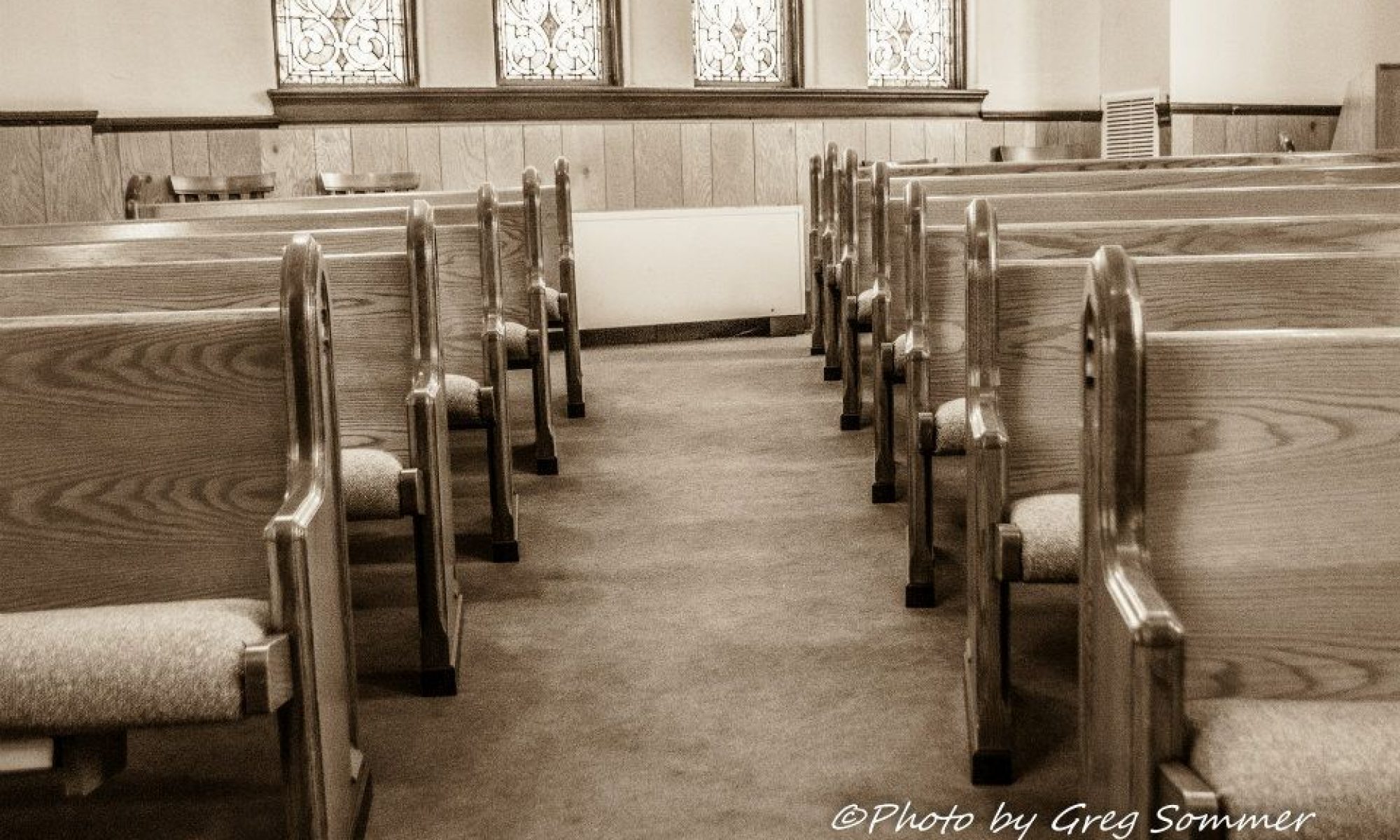
The first time I laid eyes on the Winchester Friends building, I laughed at the thought of this very large, ornate church building being an actual Quaker meetinghouse. It seemed to defy simplicity or anything Quaker. I couldn’t imagine being pastors here. My first impressions of Winchester Friends’ building not being Quaker enough were quickly dispelled when we met this faith community. We found within the walls of this meetinghouse a community with a deep commitment to Christ, a deep sense of Quaker heritage and a deep love for one another. Wisdom teaches us that most of life’s biggest decisions shouldn’t be based upon first impressions.
Over the past twenty-eight years, I’ve fallen in love with this large, ornate, high-maintenance meetinghouse. Admittedly, the building isn’t very “Quakerly,” but it reflects what was happening in the transformation of American Quakerism in the late 1800’s. Gone were the facing benches of earlier area meetinghouses. This new era of Quaker churches ushered in a worship room surrounding a pulpit and an organ. I mentioned last week Thomas Franklin “Frank” Moorman (1852-1928). Frank was a founding member of Winchester Friends, a Meeting trustee, and the head usher who also taught an adult Sunday School class for 30 years. In addition, he was a member and treasurer of the Moorman’s Orphans Home, an alumnus and board member of Earlham College, and a banker in Winchester.
As a trustee of a Friends Meeting in the middle of that transformation, Frank was interested in having all the “advanced features being enjoyed by other denominations,” and he worked with the building committee of Winchester Meeting in 1898 to make that happen. After long days in the bank, he spent long nights negotiating the purchase of the stained-glass windows, the pews, and the heating system, all to make this building as effective as possible for the Lord’s work in Winchester. I’ve often wondered if the Friends who spent all those hours planning this building had any idea of the time, energy, and expense it would require for future generations to adequately care for this building.
One hundred fifty-three years later, our faith community gathers today for another Mother’s Day celebration and for the second Art Display hosted by the Art Club (who meet in this building on the 4th Saturday of each month from 11 AM to 2 PM). The paintings, music, photos, baskets, wood sculptures or quilts on display today remind us that the work of creative hands make God’s goodness visible through the material of this world. This is true for every display in the parlor today, and for the stained glass windows surrounding us as we spend time in worship and fellowship every Sunday.
Today’s art display comes at the same time that a major project is underway here at the meetinghouse. Exposure to years of sunshine and heat, rain, ice, and wind has necessitated replacement of the exterior storm windows protecting the sanctuary’s original stained-glass windows which have graced our building for generations. They are an art form that gives testimony to God’s presence, love and blessing to the world we inhabit. They are a testimony to the teachings of Jesus Christ, the light of the world. And while they are not very “Quakerly,” they are an outward sign to the community that the crown of Christ the King — his life, death, and resurrection — is the center of who we are as a faith community.
Stained glass windows have been around since the 11th and 12th centuries and were often referred to as a “Poor Man’s Bible”. In a world where few could read or worship in their own language, stained glass windows were designed to tell stories from scripture. Windows had images of saints and Biblical events, or they had symbolism that represented faith concepts and truths. The windows at Winchester Friends are primarily symbolic. Ours is a faith tradition of listening for the voice and leading of Christ, of meditation on God’s word and practicing his presence. In that tradition of listening, waiting worship, the windows’ symbols represent the foundation for our testimony to the world.
There are three large stained glass windows on the east, west, and north walls of the meeting room. All three have been worked on in the past month to replace exterior quarter-inch storm windows with non-breakable Lexan glass. I’ve appreciated Wiskirchen Studios for working with the trustees to help us know what needs to be done to protect these stained glass windows for another fifty years. These windows have a story to tell and are a testimony to our community.
The east window is called the Christian Endeavor window. Christian Endeavor was a national youth-led movement begun in 1881 focused on promoting an “earnest Christian life, increasing fellowship and finding ways to be useful in the service of God.” When our meetinghouse was built, there was an active group of young people participating in Christian Endeavor, and placing the CE in the window was a way to let the community know this ministry was happening within the building. My grandparents met at a Christian Endeavor meeting in Idaho one hundred years ago, so I’ve always appreciated the heritage of Christian Endeavor in the world and to our meeting.
The west window is basically the same design as the east, but without the CE. Both windows are symbolic in their colors and the designs. Browns represent earth and matter, and greens represent the growth of all things, so it makes sense that both of these windows remind me of a garden. The top has a carrot design, and designs that remind me of eggplants, green beans, and yellow squash. The small circles of red represent the Spirit of Christ, the blue represents the wisdom of the Holy Spirit, and gold represents God’s light and rule.
The Rose Window on the north wall of Winchester Friends is especially rich with symbolism. The most well-known Rose Windows are the ones in Notre Dame in Paris, built in the 13th Century. The Notre Dame windows were made with Biblical images. The only similarities to our Rose Window are the circular nature, the rich blues and reds, and a center with an image of Christ. The only image visible at Winchester is the crown of Christ the King in the center of the Rose Window. There are eleven circles around the outside of our window symbolizing the disciples (minus Judas Iscariot). There are two stone tablets in the bottom corners of the window symbolizing the Ten Commandments, and eight petals circling the crown in the center, symbolizing the eight Beatitudes. All of those symbols are central themes of our faith and a testimony of our spiritual foundation as Christ-followers in Winchester, Indiana in the 21st century.
In these past twenty-eight years, the city of Winchester witnessed two local churches that succumbed to damage and had to be torn down. Another three were destroyed by a tornado, and one was sold in exchange for a newer, simpler building to maintain. As we make decisions today to protect and care for this building and the stained glass windows surrounding us every Sunday, I am reminded that beauty and art take incredible amounts of work, passion, and time to create and maintain. Each work of art reflects the beauty and gift of God’s world to us. They give form and meaning to the light of the world, and they call us to give thanks to our Creator for the beauty of God’s earth and His love for each of us. This beauty in all its forms transforms this building into a place for reflection and abundant blessing. I give thanks for the generations before us and for our faith community today whose stewardship of this building witnesses to our care for God’s world. The art and craftmanship reflect God’s presence and blessing. May we see the art of our lives, and the art in our lives, as a testimony of God’s love to the world.
–Pam Ferguson, 10 May 2026
Queries for Worship-Sharing and Reflection
1) What symbolism in Winchester Friends’ stained glass windows is most meaningful for you today?
2) In what ways can your life be understood as a work of art crafted by God (Psalm 139:13,14)?
3) Why is stewardship such an essential part of both parenting and of caring for places of worship?
4) In what ways is parenthood – whether biological, social, or spiritual – similar to creating works of ar